Community-Based Pharmacy Residency Program
Community-Based Pharmacy Residency Program Overview
Residency Approach
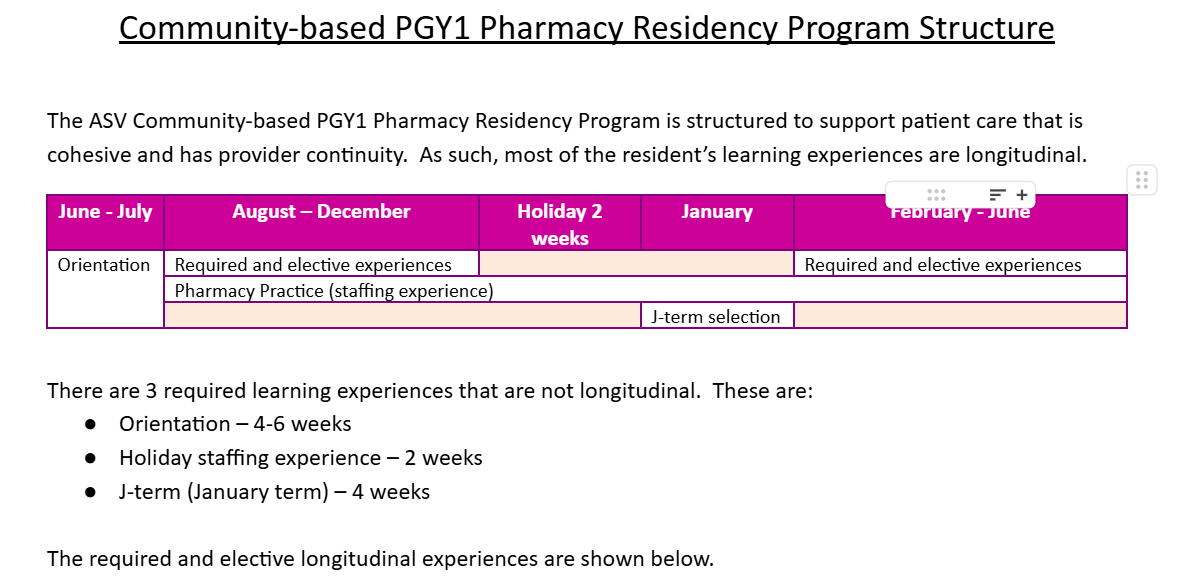
The approach of the Community-based Pharmacy Residency at St. Vincent Indianapolis is to provide the residents with the opportunity to expand their knowledge and skills in caring for a diverse outpatient population. This opportunity will be provided through active participation in patient-centered dispensing, evidence-based disease state management, patient/family and medical staff education, medication safety, outcomes-based research, and educational and scholarly activities. Experiences will provide the residents the ability to function independently in Community-based Pharmacy or ambulatory care environments, or prepare them to pursue additional postgraduate training.
Purpose Statement
PGY1 residency programs build upon Doctor of Pharmacy (PharmD) education and outcomes to develop pharmacist practitioners with knowledge, skills, and abilities as defined in the educational competency areas, goals, and objectives. Residents who successfully complete PGY1 residency programs will be skilled in diverse patient care, practice management, leadership, and education, and be prepared to provide patient care, seek board certification in pharmacotherapy (i.e., BCPS), and pursue advanced education and training opportunities including postgraduate year two (PGY2) residencies.
Program Site Description
The Community-based Pharmacy Residency at St. Vincent Indianapolis focuses on providing compassionate person-centered care to all patients, regardless of income and insurance status. Both St. Vincent outpatient pharmacies serve a diverse patient population from many different cultural backgrounds. One of these pharmacies is located within the St. Vincent Primary Care Center, a clinic dedicated to service of the uninsured and underinsured population in Indianapolis. Both practice locations are committed to resolving healthcare disparities and improving pharmaceutical care for all patients. Educational competency areas, goals and objectives can be found in “Required Competency Areas, Goals and Objectives for Postgraduate Year One (PGY1) Community-Based Pharmacy Residencies” prepared jointly by ASHP and APhA.
About The Hospital
St. Vincent Hospitals and Health Services is a community teaching hospital with over 700 beds and is the largest healthcare facility within Ascension Health, the largest Catholic health system in the world. The hospital system is comprised of St. Vincent Indianapolis, Peyton Manning Children’s Hospital at St. Vincent and St. Vincent Women’s. St. Vincent Indianapolis serves as a tertiary referral center for a large network of Indiana St. Vincent Health hospitals. The hospital has an active Medical Education Department supporting medical residents and fellows in Cardiology, Family Practice, General Surgery, Internal Medicine, Obstetrics/Gynecology, Pediatrics, Podiatry and Transitional/ Preliminary Medicine. The pharmacy department provides postgraduate training programs for pharmacists and maintains affiliations with Butler, Manchester and Purdue universities.
The St. Vincent Joshua Max Simon Primary Care Center is a medical residency training facility where physicians provide optimal outpatient care to more than 13,500 patients, accounting for more than 72,000 patient visits/year. Patient demographics are diverse and include the uninsured, underinsured and insured; English and non-English speaking individuals; literate and illiterate. The Primary Care Center is located on the St. Vincent Indianapolis campus.
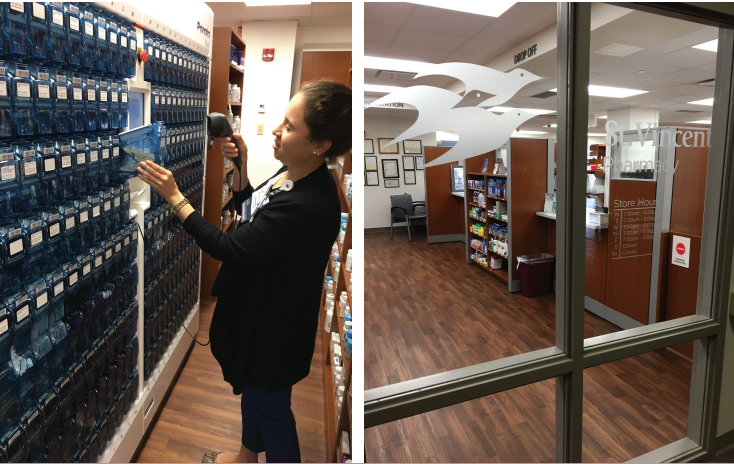
Two St. Vincent outpatient pharmacies serve a broad patient population with a variety of healthcare needs. The St. Vincent Pharmacy is open to the public, serving both ambulatory patients and those being discharged from the hospital, as well as St. Vincent associates from across Indiana. The Primary Care Center Pharmacy offers pharmaceutical services to an underserved population, fulfilling the mission of St. Vincent to serve the poor and vulnerable. These services include utilizing 340b contracts, Dispensary of Hope resources, and facilitating manufacturer-based patient assistance programs.


Program At A Glance


Required Learning Experiences
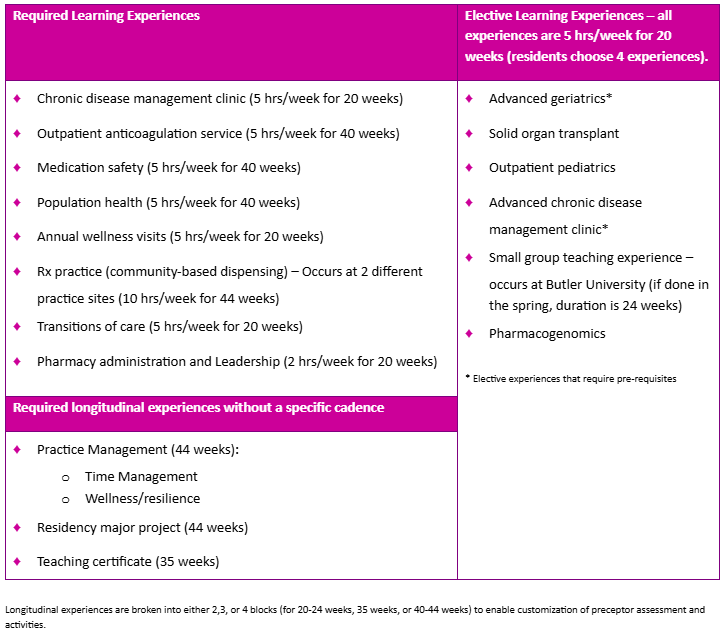
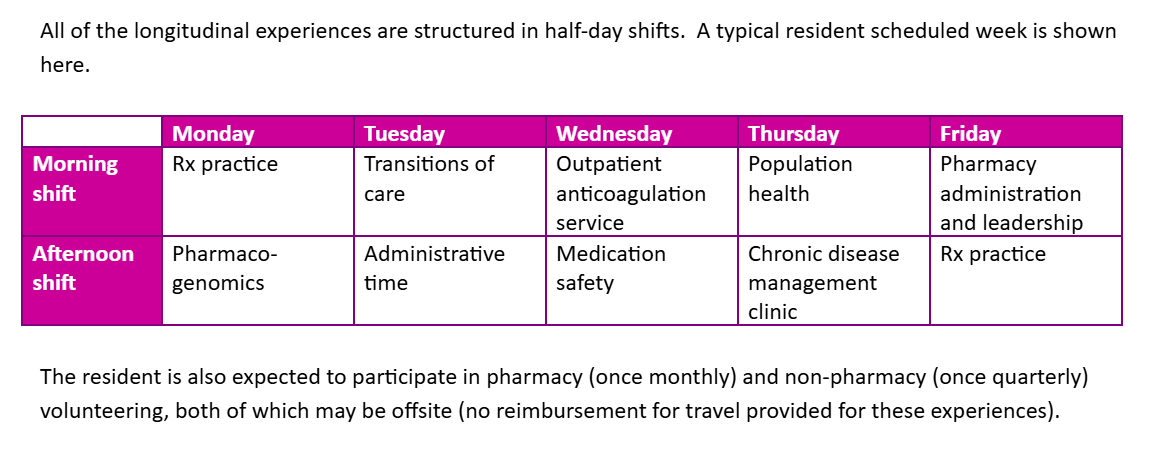
The Pharmacy Practice rotation is designed to provide the resident with the opportunity to focus on patient-centered dispensing. This experience incorporates ensuring safe use of high-risk medications, utilizing a variety of medication access programs, and participating in the medication bedside delivery process. The resident will also participate in precepting community-based APPE students, with responsibilities increasing throughout the year.
The Transitions of Care rotation is designed to provide the resident the skills and experience to assist patients in their transitions between different care environments. Residents will work with patients across the care continuum, from patients being discharged from the acute care setting, to those following up in a primary care setting.
This rotation offers experiences in using payer and health system data to improve patient care and quality metrics. Residents will identify patients for targeted interventions and provide direct patient care to these individuals. Residents will also utilize larger data sets to determine recommendations and processes to improve the effectiveness and efficiency of the broader health system.
The Outpatient Medication Safety rotation offers the resident the opportunity to advocate for the safe use of medication in a variety of outpatient settings. This experience includes responding to reported outpatient safety events, administering prospective risk identification programs, and implementing quality improvement processes. The resident will also act as a preceptor for APPE students and medical residents during their experience. The resident will also participate in developing interactive medication safety games, student experiences, or escape room experiences for the medical residents.
The Anticoagulation Management rotation embeds the resident in an outpatient warfarin clinic service for a year-long longitudinal experience. The resident will have the opportunity to provide patient care in a medical residency clinic using a collaborative therapy management protocol.
This experience is designed to provide the resident the opportunity to perform Medicare Annual Wellness Visits. Resident will further their understanding of social changes, appropriate prescribing practices, and preventative care for older adults.
The CDTM learning experience is designed to provide the resident with foundational chronic disease management knowledge and entry level experience in providing care under a collaborative practice agreement in adult patients within the Primary Care Center. Diseases managed include asthma, COPD, diabetes/pre-diabetes, heart failure, hyperlipidemia, hypertension, weight loss and tobacco cessation. Residents will assess patients through interviews, and intervene with appropriate education and medication adjustments. Residents will also gain experience helping patients overcome barriers to care, such as working with drug formularies, developing appropriate education based on health literacy, and utilizing interpreter services.
The pharmacy administration experience provides residents with the opportunity to learn about the process of administering both dispensing and clinical pharmacy services. The resident will be involved in managing daily operations, evaluating the effectiveness of current processes, and designing long-term business development plans.
Longitudinal Experiences
Teaching
- The resident will be required to participate in a teaching certificate program offered through Butler and Purdue
universities. - The resident will precept APPE students throughout the year in a variety of settings:
- Pharmacy Practice: the resident will act as primary preceptor during at least two APPE rotation months.
- Medication Safety
- Pharmacy Practice
- The resident will be required to participate in health education including:
- Two 45 minute Outpatient Grand Rounds presentations to the statewide outpatient pharmacy team.
- Various other presentations such as patient cases, pharmacy technician education, and presentations to other members of the healthcare team, patients and caregivers.
Residency Project
The resident will be required to complete a residency project to be presented at a local, regional or national meeting, and develop a manuscript suitable for publication. The project will be tailored around the interests of the resident as well as the needs of the organization.
Pharmacy Administration
The Pharmacy Administration experience provides residents with the opportunity to learn about the process of administering both dispensing and clinical pharmacy services. The resident will be involved in managing daily operations, evaluating the effectiveness of current processes, and designing long-term business development plans.
Service Commitment
The residents will be required to participate in community service projects throughout their residency year. They are asked to volunteer at a local free clinic monthly and to participate in non-pharmacy volunteering once per quarter.
Wellness and Resilience
Completing a pharmacy residency is an accomplishment. During this time, residents may feel an increased level of stress and pressure. To combat this, the residents participate in a 6 week mindfulness and stress-reduction course called Cultivating Reverence for Living. They are encouraged to set wellness goals throughout the year, and the residency team works with the residents on an ongoing basis to maintain well-being and resilience.
Current Residents
2024-2025 Community-Based PGY1 Residents


She then transitioned to co-owner and pharmacist of an independent pharmacy, before moving to the join the ambulatory care clinical team at St. Vincent in 2009. She is the residency program director for the Community-based (PGY-1) Pharmacy Residency Program and the Ambulatory Care (PGY-2) Pharmacy Residency Program at St. Vincent Indianapolis. Her areas of focus include medication safety, quality improvement, developing adherence, and transitions of care programs.

Services. Brad received his PharmD degree from Butler University in 2006. Brad’s previous experience was in community pharmacy. Brad’s current interests include anticoagulation, tobacco cessation and medication therapy management.

Pharmacy (PGY-1) Residency Director
Pediatric Residency: St. Vincent Indianapolis
Pharmacy Residency: St. Vincent Indianapolis
Doctor of Pharmacy: Butler University
Solid Organ Transplant/Immunology Residency: University of Tennessee
Doctor of Pharmacy: West Virginia University